Is it too hot to visit Brisbane in February? Or are the locals just exaggerating? What I’m here to tell you: February in Brisbane is a sweltering month of hot, humid days & showery afternoons that feel like you’re wading through a warm soup. But is it really “too hot” to visit? My answer is a resounding “not if you get your head around how Brisbane’s subtropical climate works and plan your days like a local, rather than just relying on some brochure.
I’m Paul – I’ve spent years guiding tourists through really hot places – deserts that turn thongs to bitumen, and tropical towns where you’re sweating through a spare shirt by 9 on the dot. Brisbane in February is somewhere in between – it’s not the world’s hottest place by a long shot, nor is it the middle of the wet season in Darwin. What you get is a humid subtropical climate doing its thing – warm mornings, stormy build-ups, and then – just when you think it’s going to be a long day – the river breeze kicks in, and you feel reasonably okay.
Let’s break down what that means for your trip.
Contents
- 1 What Brisbane Summer Really Feels Like
- 2 How To Not Get Caught Out By The Heat
- 3 River Breezes & Smart Cooling Spots
- 4 Wildlife & Outdoor Attractions Guide
- 5 The Beaches And The Gold Coast Getaway
- 6 Storm Season & Cyclone Season in Queensland
- 7 Crowd Levels, School Holidays & Travel Costs
- 8 Getting Around In The Aussie Heat
- 9 When It’s Time To Head Indoors
- 10 Who Should Rethink A February Visit?
- 11 Who Will Actually Enjoy It
- 12 A Practical February Day Flow
- 13 Final Word From Paul
- 14 FAQ
What Brisbane Summer Really Feels Like
February is slap bang in the middle of the Australian summer, and that means the weather in Brisbane is all about humidity, cloud buildup, and a defined rainy period that usually peaks mid-to-late afternoon.
According to the Bureau of Meteorology, which has been tracking the weather for years, average February conditions in Brisbane look like this:
Climate Factor Typical February Average
Maximum Summer Temperature 29–30°C
Overnight Minimum 21–22°C
Humidity (9 am Avg) 70–75%
Rainfall 140–160 mm
Sunshine Hours ~7–8 hrs per day
Rain Days 12–14 days
Now, averages can only tell you so much. Some days can reach 33-35 degrees Celsius. Cloud cover begins to build, and wind direction can shift as storms move in. Then, around 3-5 pm, the sky really lets loose and pours a good, proper subtropical downpour that lasts anywhere from 30 to 60 minutes.
Its drama is what makes it so memorable, not its consistency.
And then there’s the humidity – that’s the real game-changer. That’s why hot days can feel so much heavier on you than The thermometer says.
How To Not Get Caught Out By The Heat
Locals don’t let summer get the better of them. They just adjust their plans to suit the conditions. It’s that simple.
A sensible summer schedule looks something like this:
- Don’t underestimate the importance of sunrise. Early mornings are the best time to be outdoors. February’s sunrise & sunset times give you a bright start and warm evenings to look forward to.
- Use the midday lull to stay indoors. This is when activities indoors really come into their own.
- Late afternoon storms are a great time to cool off.
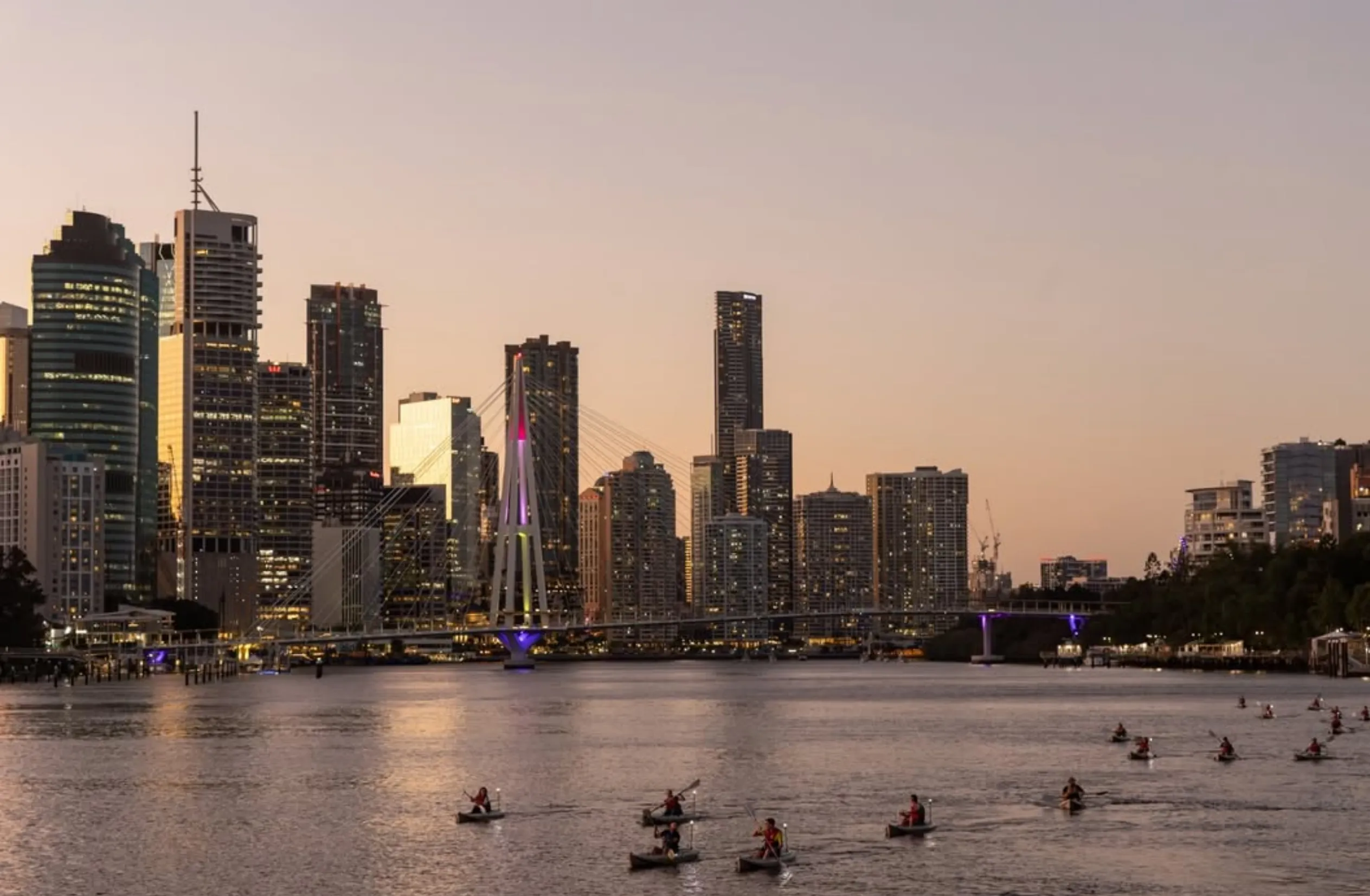
- Evening hours are when the city comes alive.
Unless you plan to spend every waking hour stuck to a fixed outdoor schedule between 11 and 3 pm, you’ll get fried. That’s what I’ve seen happen to visitors who try to power walk along the South Bank at midday, only to be hunting down some air conditioning within the hour.
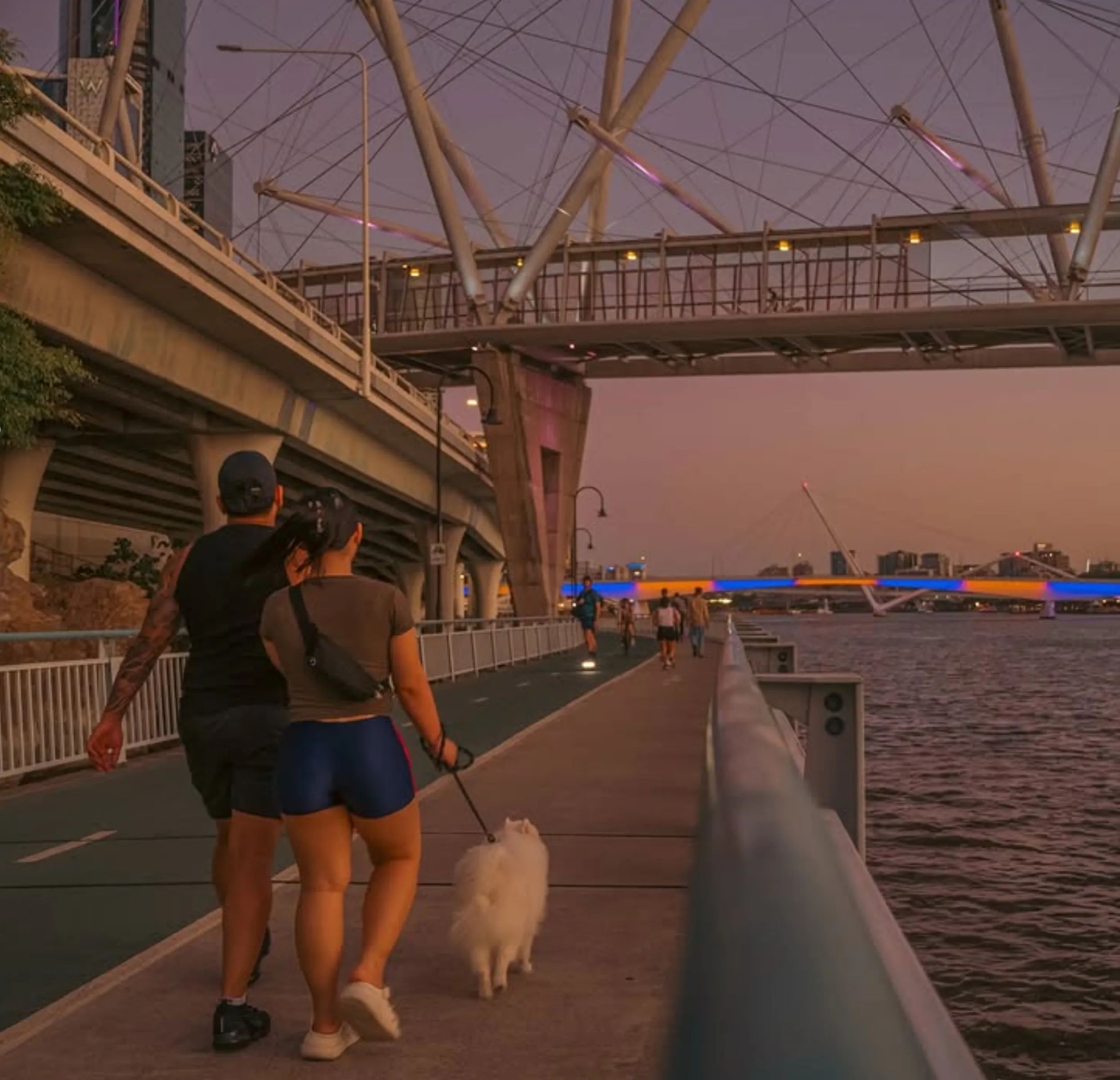
Instead, get your exercise in early. Do your river walks, cycle along the bike paths, or go visit the wildlife before the sun gets too high in the sky.
River Breezes & Smart Cooling Spots
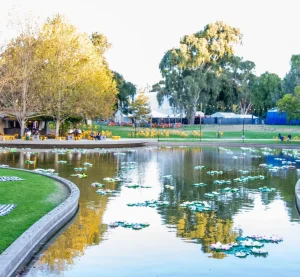
South Bank Parklands was built for summer, so it’s designed to keep visitors cool. The lagoon gives you a safe place to swim, right in the city. The pedestrian pathways are all shaded & protected from the sun. And by late afternoon, a sea breeze usually starts to blow in along the Brisbane River, making dining on the riverfront a real treat.
New Farm Park features large fig trees that provide deep shade. In the morning, it feels calm and manageable. By midday, you’ve likely retreated to a cooler spot – which is perfectly fine.
The River City knows how hot it gets in summer, and it’s designed around that. It works with the conditions, not against them.
Wildlife & Outdoor Attractions Guide
Lone Pine Koala Sanctuary is an early-morning must-visit. If you go too late in the day, the animals get sluggish, and so do you. The same applies to tours from Brisbane: many operators schedule early departures to avoid the heat.
If you’re looking to visit some of the offshore reefs further north, where glass-bottom boats and marine biologist-led experiences operate, that’s a different climate zone altogether. But what’s interesting is that Queensland’s coast has developed a whole range of summer-friendly activities to adapt to the conditions.
The Beaches And The Gold Coast Getaway
The Gold Coast is about an hour or so south, and it’s a real haven for some ocean airflow. Beaches like Rainbow Bay Beach and Greenmount Beach get a nice, consistent sea breeze going on.
The sea temperature is a pleasant 26-27 degrees in February – warm enough for a good swim without turning blue, but not so hot that you’re begging for a break.
Many visitors book day trips from Brisbane to the Gold Coast to escape the city’s humidity. It’s a simple but effective way to change up your trip without having to scrape together a whole new accommodation plan.
Storm Season & Cyclone Season in Queensland
February falls in the middle of Cyclone Season in Queensland (November to April). Now most of the time Brisbane gets lucky, avoids getting hit straight on, but those tropical storms can still bring some serious rain – and not just in the usual spots either.
What’s more typical in Brisbane, though:
- Afternoon thunderstorms start to roll in.
- Those short, sharp rain showers can hit fast.
- You may even get a sneaky wind shift for a bit.
- And just as quickly as they started, the rain cleared & the sun comes out.
So, toss in a lightweight rain jacket and some water-repellent gear; there’s no need to go all out expedition-style. And don’t forget to pack some ‘Sunsmart’ clothing – it’s just as important to stay safe in that sun as it is from the rain.
Travel insurance is always a good idea, especially during summer in Queensland, as you never know when an incident might occur.
Crowd Levels, School Holidays & Travel Costs
February just happens to be a pretty good time to visit Brisbane, as far as tourism goes. The winter months down south are starting to get a bit chilly, so it’s a real draw for the cold-weary Aussies. And then, of course, there are the major events such as the Brisbane Festival and Riverfire in September.
February is actually a pretty steady month.
You can usually expect:
- Accommodation prices will be slightly lower.
- Traffic around the airport isn’t too crazy.
- Getting a restaurant booking isn’t as hard as it is in peak months.
- And there are heaps of tours to choose from, no worries.
Some school holidays do overlap, depending on the state calendar & all that, but overall it’s a pretty quiet month.
If you’re watching your travel budget, February can be a pretty good time to get some good value.
Getting Around In The Aussie Heat
Brisbane handles summer travel pretty well, I’d say.
- Public transport is air-conditioned – nice & cool.
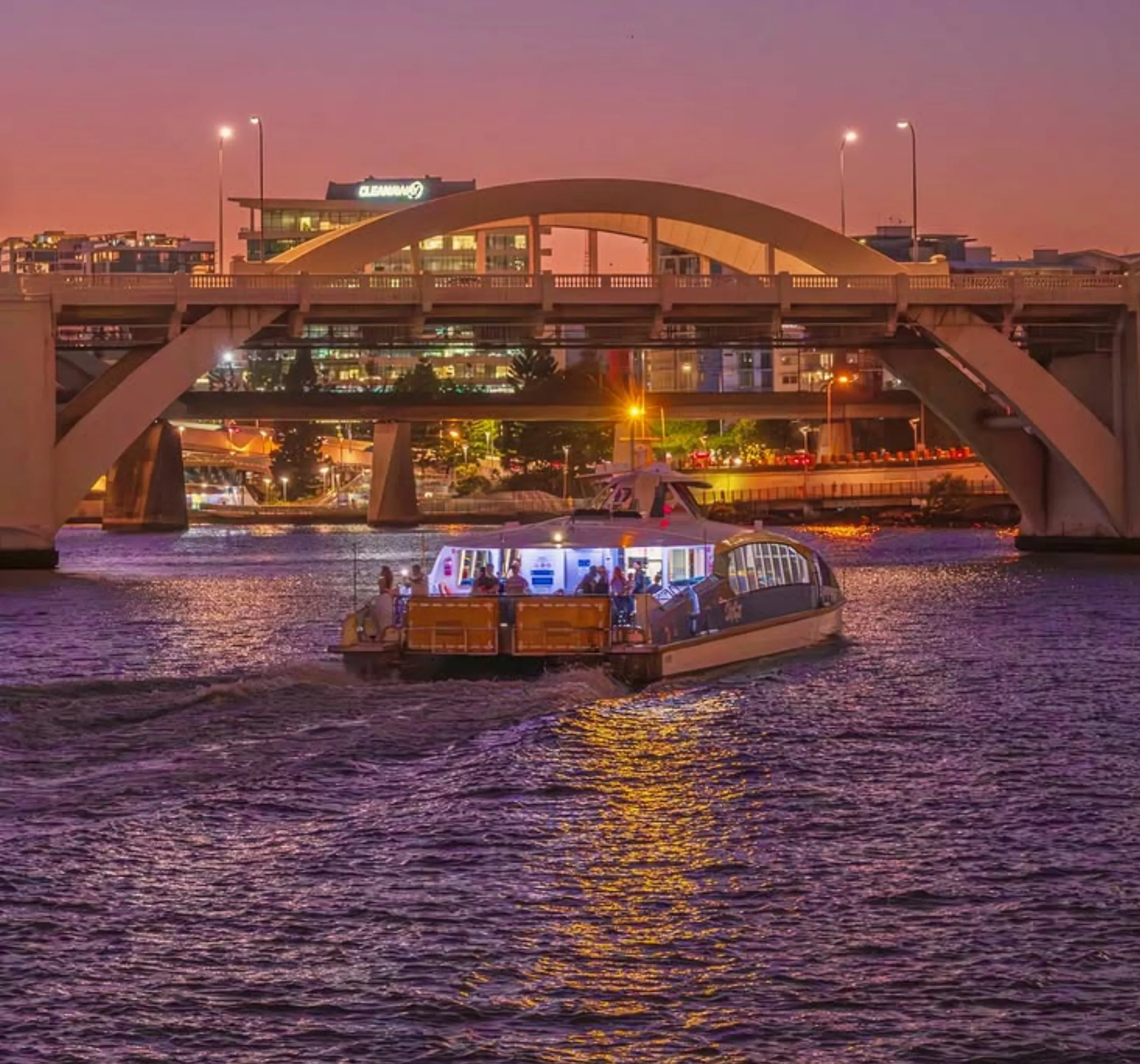
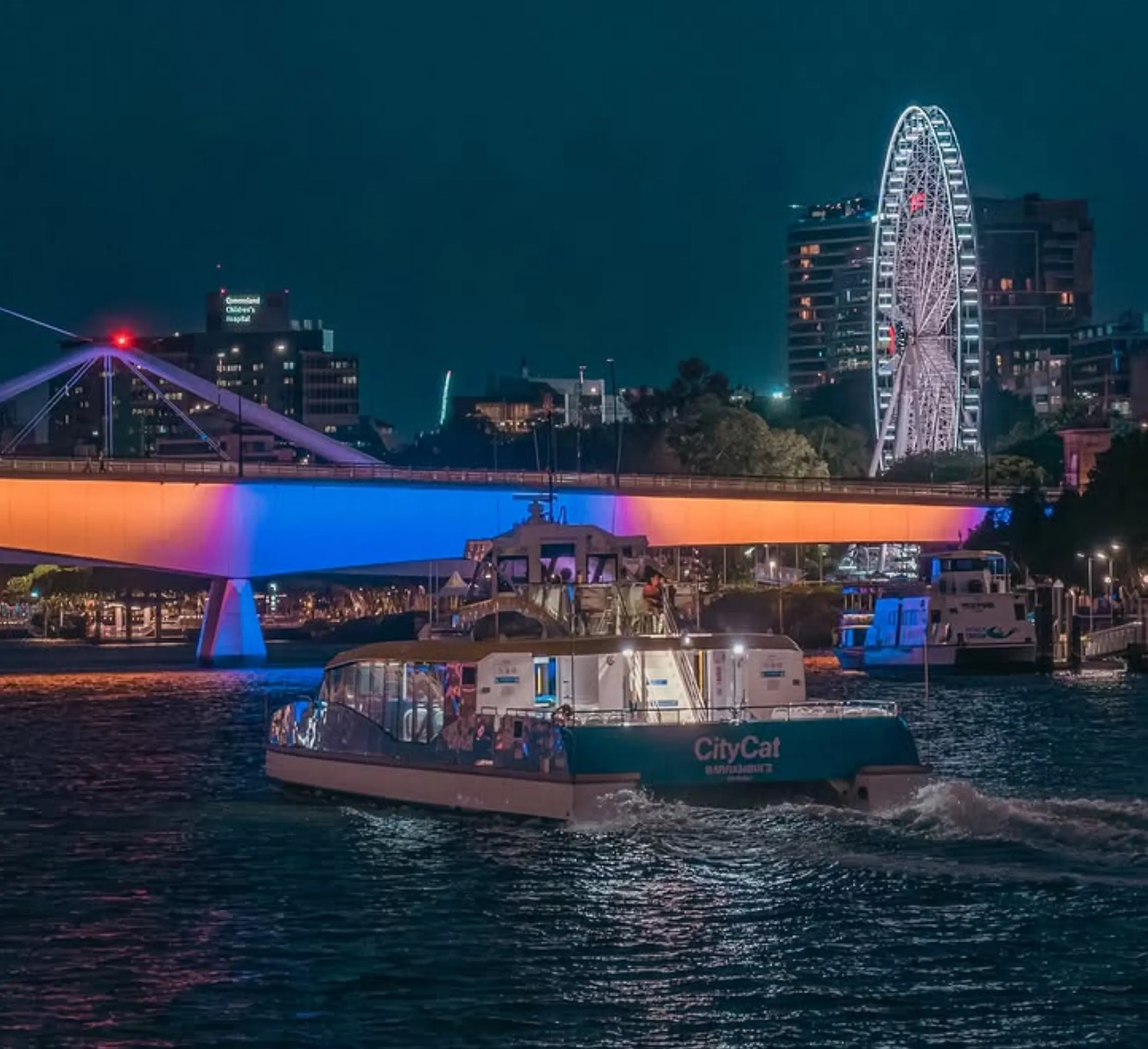
- The ferries along the river are a great way to get some breeze.
- You can take a bike ride along the pedestrian paths at dawn when it’s a bit cooler.
- If you need to walk around the central areas, there are usually shaded areas available.
- If you are planning to do a road trip around Queensland, a campervan rental works – just be sure to park somewhere shady, those vans get scorching hot in the full sun.
Companies like Autopia Tours have offered guided trips across Australia for years, and their experience handling warm-weather conditions is top-notch.
When It’s Time To Head Indoors
Midday is when you should probably take it easy & stay out of the heat.
That’s when you should check out the museums, galleries, breweries and cafes – all the good air-conditioned spots. And if you do catch a game at Suncorp Stadium, it’s usually scheduled for a nicer time of day.
Brisbane is a summer city, not a cold-climate European city, so adjust your expectations & deal with it.
Who Should Rethink A February Visit?
Be honest with yourself.
If you genuinely struggle with humidity, want to be trekking through the bush all day or are expecting some nice fresh alpine air, then you might want to consider coming back in May or September instead.
Rainforest walks and longer hikes are much more comfortable in the cooler months; in summer, pace yourself.
Who Will Actually Enjoy It
In February, you’ll find a city that suits people who:
- Somehow manage to thrive in less crowded places.
- Know a thing or two about snagging a bargain.
- Don’t mind making plans around the weather.
- Enjoy getting in the water to cool off in sea temperatures that are still pretty warm.
- Love dramatic skies, thunderstorms and the like.
Some guidebooks give Brisbane a thumbs-up for livability, and while tourism scores can vary by season, summer generally offers value, even if it’s not perfect.
It’s not exactly the kind of weather you’d see on a postcard. But that’s exactly what it’s like – Real Queensland weather.
A Practical February Day Flow
6:00 am – Get out for a morning walk along the river 8:00 am – Get a decent cup of coffee in New Farm 9:30 am – Get up close and personal with some wildlife 12:30 pm – Treat yourself to a nice, long lunch indoors 3:30 pm – Head out to watch the storms from under a bit of cover 6:30 pm – Grab dinner at South Bank
If you fancy a bit of an escape from the city, check out some tours that leave early in the morning – they’ll get you back before the heat really sets in.
Final Word From Paul
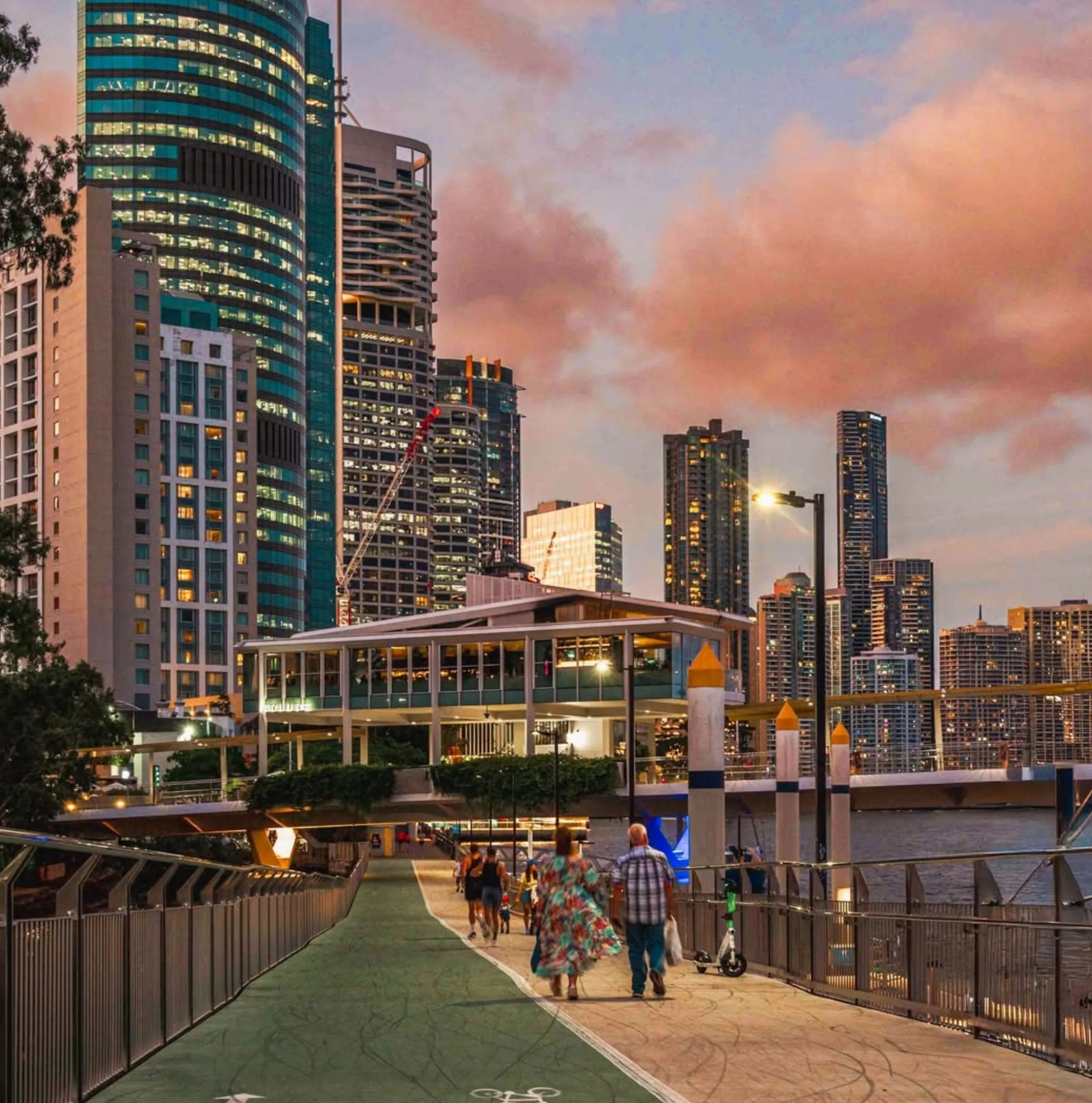
Brisbane in February isn’t mild and pleasant. It’s not pretending to be something it’s not. No, this is a city in full-on Aussie summer mode – hot mornings, stormy clouds, warm nights and a rhythm that’s just waiting for people who are paying attention.
Too hot? Not if you plan your days like a local.
Get up early. Take a break for a bit in the middle of the day. Stay hydrated. Seek some shade. And for goodness sake, respect the subtropical climate.
Do all that, and you won’t just be surviving February in Brisbane – you’ll be thriving.
FAQ
Is Brisbane’s February weather unbearable?
It’s warm and humid, but if you plan ahead, you can make it work.
Does it rain all day?
Unlikely. Expect a shower in the afternoon rather than solid rain all day.
Can I still enjoy the beaches in summer?
Yes, the sea temperature’s still warm. The sea breeze helps keep things more bearable than you might expect.
Is this a good time to be budget-conscious?
Yep. For the most part, it’s outside of peak season, so you can expect to find some good deals.
Do big events in the city affect February crowds?
Actually, no – big events like the Brisbane Festival and Riverfire usually happen a bit later in the year, so in February you’re likely to find things a bit more relaxed.